A number on a cross
A vagrant who died in the colony of Wortel was buried anonymously. The wooden cross carried a lead plaque with a number, not a name. The burial register on this website keeps the names that belong to those numbers, for the years in which Wortel was a section of Merksplas.
The colony
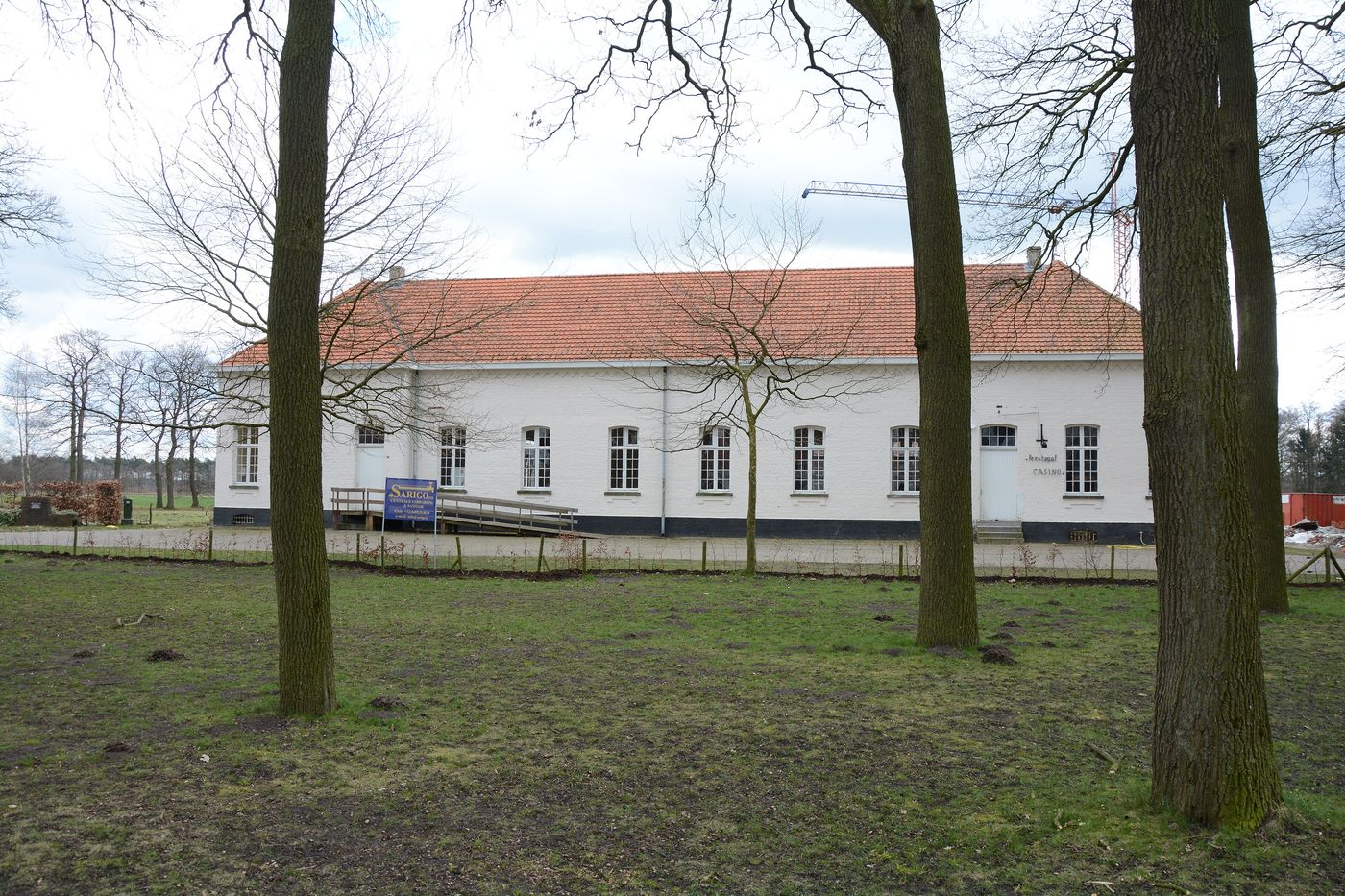
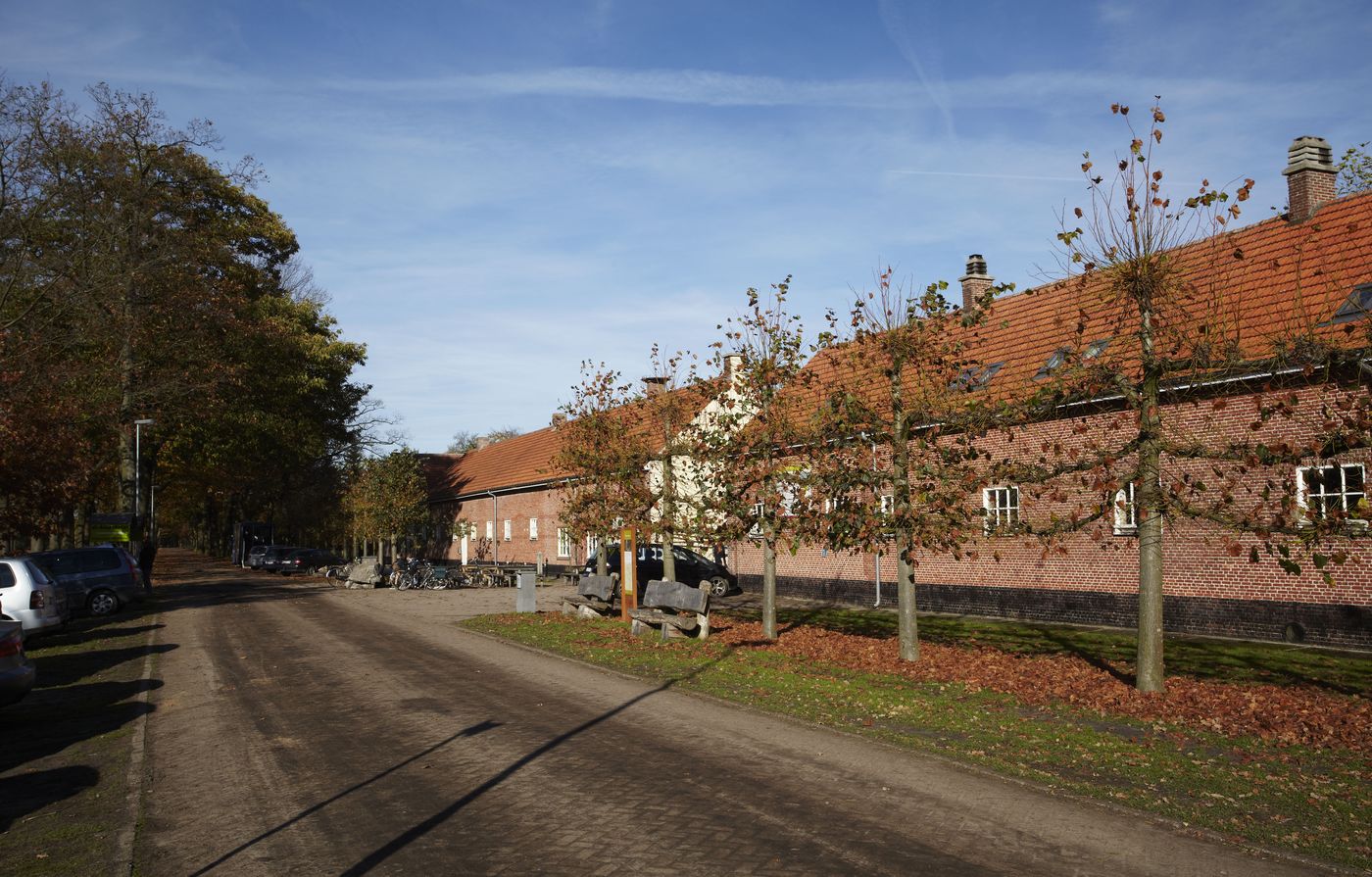
Wortel Colony was founded in 1822 as a free agricultural colony for poor families. After the Society of Benevolence went bankrupt, the Belgian state bought the estate in 1870. From the law of 27 November 1891 for the repression of vagrancy and begging onwards, justices of the peace could place men without work or a home "at the disposal of the government". They were sent to a State Benevolent Colony: to the beggars' depot of Merksplas, or to a house of refuge such as Wortel, meant for those who were old, ill or out of work.
In the twentieth century Wortel changed status several times. In 1929 the house of refuge of Hoogstraten-Wortel was closed and the vagrants went to Merksplas. Because it became too crowded there, vagrants stayed in Wortel again from 1 March 1931, now as a section of Merksplas. Only in 1955 did Wortel become an independent institution again. The vagrancy law was abolished on 1 March 1993.
Who is in the register?
The register on this website begins shortly after the vagrants returned and ends just before Wortel became independent in 1955. It contains only men. Willy Van den Bergh, who studied the registers of the colony, counts four periods for the vagrants of Wortel between 1931 and 1954, with 324 deaths in all. This register counts 324 men. These are the vagrants, not the other residents Wortel had in those years.
For there were others. On 1 August 1935 the Rijkskoloniegesticht (colony asylum) opened in Wortel, an asylum for 400 mentally ill patients. It was meant for vagrants with a mental illness, but also took in civilians from overcrowded asylums. The older vagrants then moved to Merksplas and came back in March 1940, 175 men in all; a section of vagrants fit for work stayed in Wortel. From September 1939 to the end of February 1940 Wortel also housed about two hundred Jewish refugees, a section of the refugee camp of Merksplas.
The patients of the asylum had their own section in the cemetery and their own plaques, with the letter A for asiel (asylum). According to Van den Bergh, 442 of them were buried there between 1935 and 1945. As far as we can tell, they are not in this register.
The cemetery
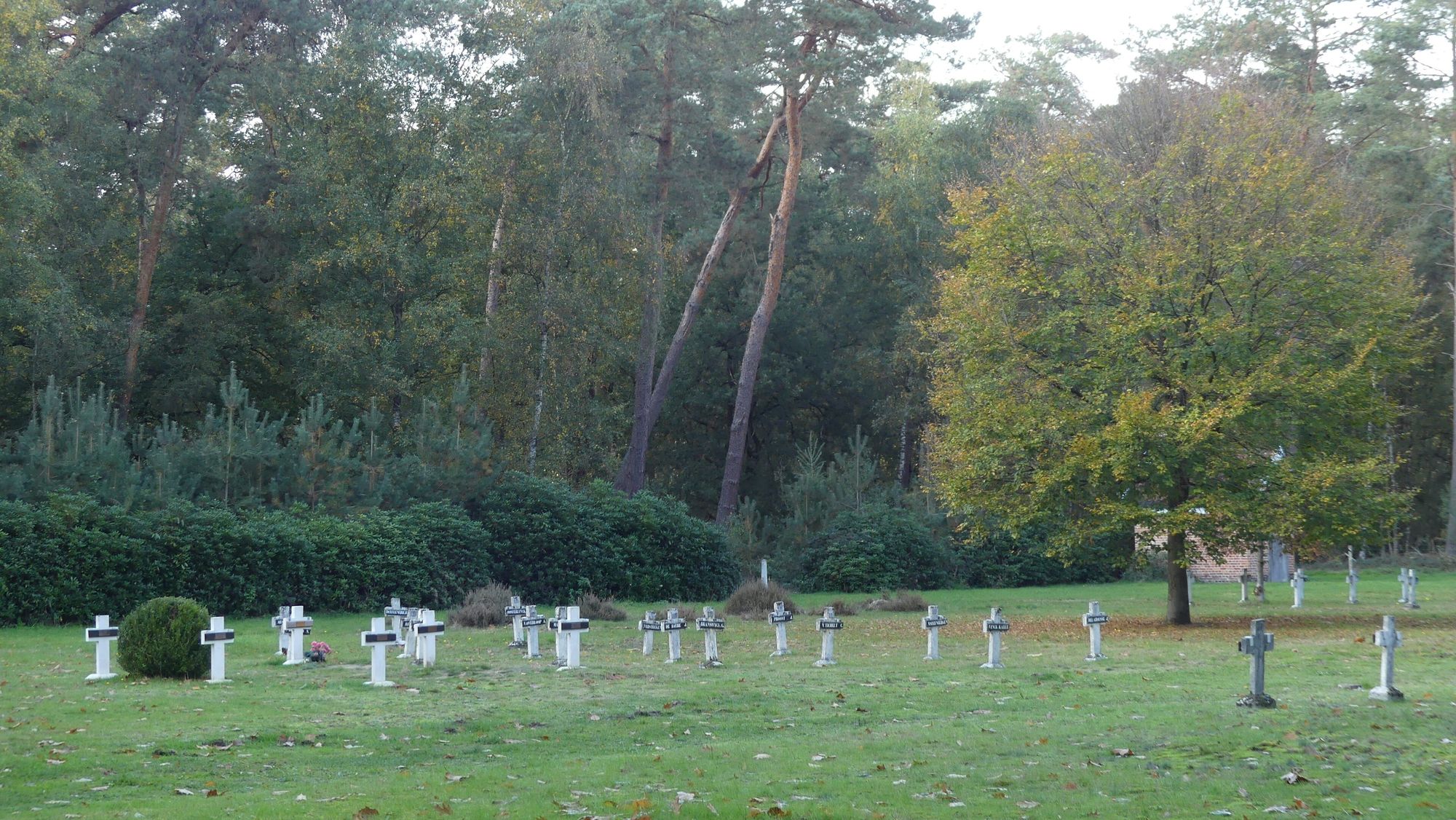
No document at all has been found about the laying out of the cemetery. Van den Bergh places it between 1892 and 1896: the first vagrant died in Wortel on 28 August 1891, a report of 11 August 1897 mentions the cemetery for the first time, and a map of 1898 shows it where it lies now, on one of the northern avenues. The years 1870 and 1986 on the entrance are therefore not the beginning and the end of the cemetery.
The funeral was plain. The chaplain of the colony held a modest Catholic service. Until 1972 the farm horse drew the hearse with the coffin to the cemetery. The burial was anonymous: the grave was given a small wooden cross with a plaque that referred to a number.
A man who had family did not have to stay in Wortel. If relatives were found, they had the right to claim the body and to arrange the burial themselves. If they gave up that right, or if nobody was found, the institution arranged the burial.
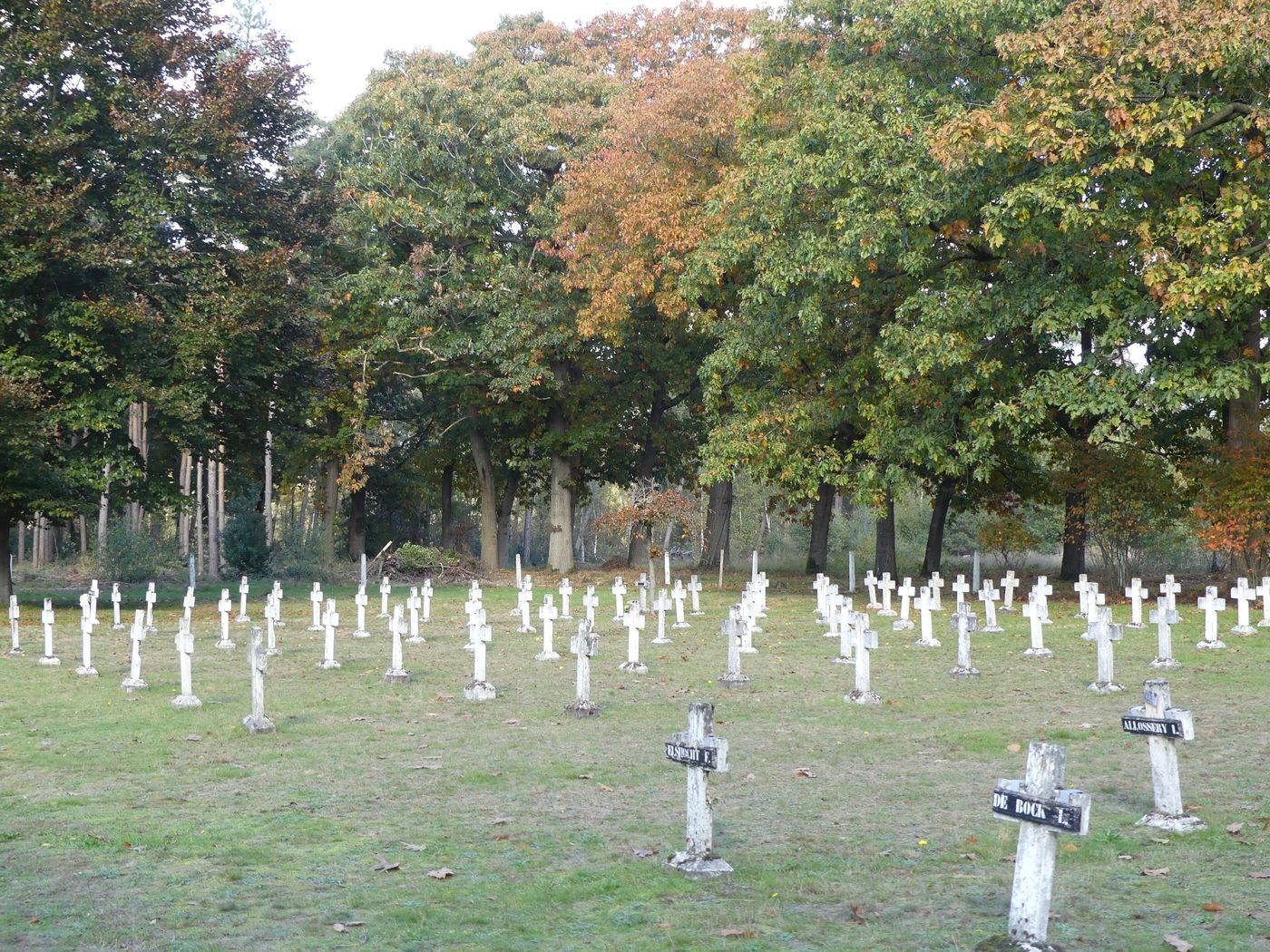
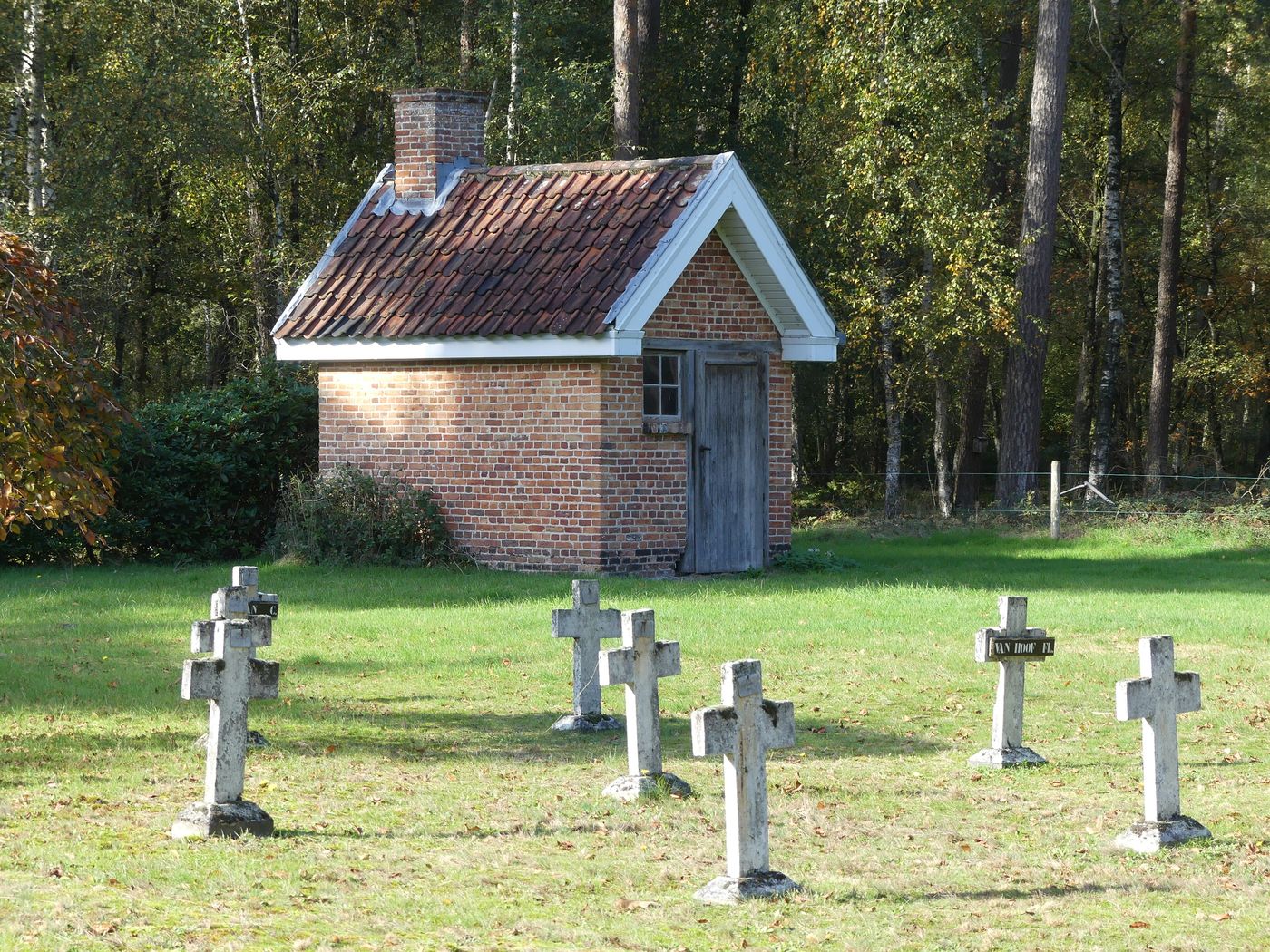
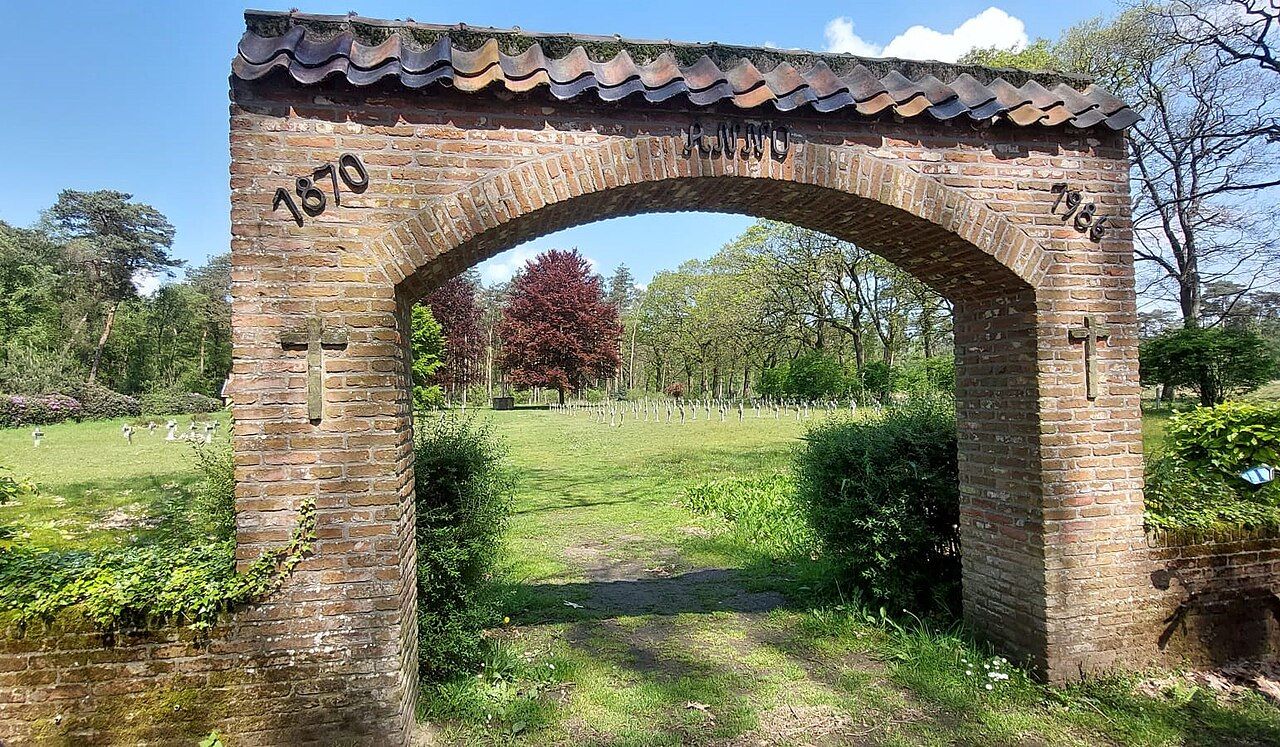
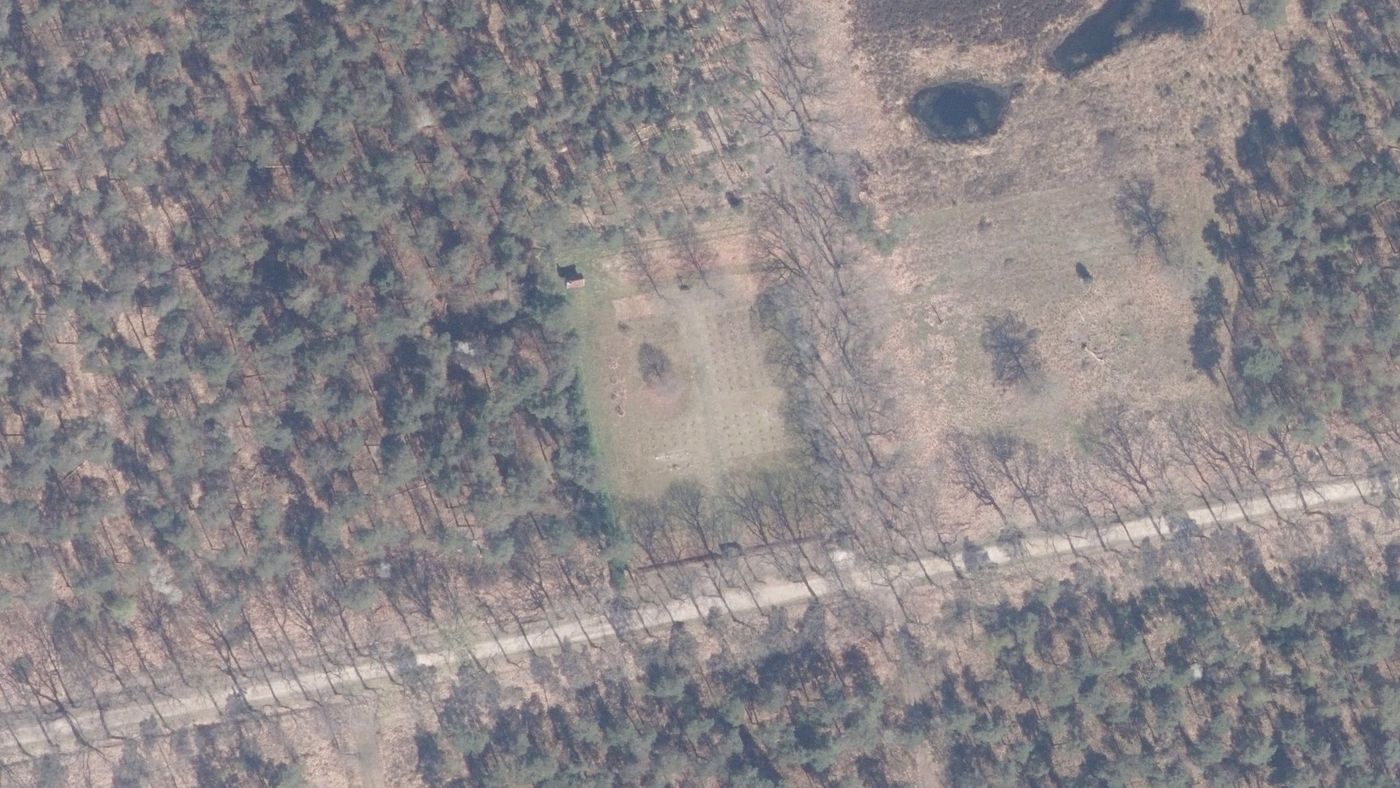
In all, Van den Bergh counts 1,585 burials in the vagrants' cemetery, far more than the 168 small crosses that stand there today. By about 1980 the rear part, where the section of the asylum also lay, was in such poor condition that the director had it cleared. Woodland grows there now. The corner posts have been kept and can be seen from the avenue.
The lead plaque
The plaques changed over the years, and this shows in the register. Until 1929 the wooden crosses carried a metal plaque with only a number. From 1 January 1935 the plaques were made of lead, with a number and the date of death. Van den Bergh says nothing about the plaques of 1931 to 1934. From January 1941 a letter came before the number: the M of Merksplas, of which Wortel was a section. In the register that letter appears with some of the numbers.
The small concrete crosses that give the cemetery its appearance today are more recent. They replaced the wooden crosses from 1962 onwards and were given plaques with the letters W or RWK. Only after the cemetery was laid out anew in 1986 did the crosses also get a name plate.
Which number is it? The sources do not agree. According to Van den Bergh the plaque refers to the number of the deceased in the register of deaths. The information board at the cemetery and the heritage walk of Hoogstraten say that it is the number a vagrant was given when he was registered in the colony. This register keeps the two numbers apart: the number of the grave plaque and the registration number are in separate columns.
More than a hundred plaques have been found in the cemetery with a metal detector. The plaques with a number and a date could be linked to a name.
Not buried in Wortel
In the column where the register notes the date of burial, not every man has a date. Sometimes there is a word, sometimes a question mark, sometimes nothing.
- Leuven, for 41 men. The register gives no more than the name of the city. For the same years Van den Bergh counts vagrants who "hun lichaam ter beschikking stelden aan de wetenschap" (placed their body at the disposal of science), without naming a university. Karel Govaerts of the Gevangenismuseum (the prison museum) describes it as less voluntary: bodies of vagrants were sometimes collected for anatomical research, even before the funeral. We have not found a law or a regulation for the colonies. That this refers to the university of Leuven is therefore our reading of the register.
- Corpus translatum, for 17 men. Latin for "the body has been transferred". The man was not buried in the colony. The family probably claimed the body, as was their right, but the register does not say where it went.
- Burgerlijk, Jood, Protestant (civil, Jew, Protestant), for 6 men. A man who was not Catholic or did not want a church funeral was given that note instead of a date. A sketch in the archive of the prison museum shows a "Jodenkerkhof" (Jewish cemetery) in Wortel and the separate grave of a Muslim. Where the Protestants and the men with a civil burial lay is not known.
- A question mark, for 14 men. When and where they were buried was not known when the register was transcribed. See also the war years.
- Nothing, for 60 men.
The war years
In no other year of the register did as many men die as in 1943: 40. We have not found an explanation in the published sources. From March 1940 the section for elderly men was back in Wortel, so the population was old. From 1942 the colony wrote a monthly report on the food supply and the health of the colonists; those reports are kept in the State Archives and have not been consulted for this website.
13 October 1944
In the autumn of 1944 Wortel Colony lay for weeks in the front zone, inside the German lines. On Friday 13 October 1944 the colony was badly hit. In the corner house of the farm, Jan Lenaerts, the head of the farm, his wife and two sons died. In the institution the kitchen was among the parts that were hit: thirteen dead were recovered from the rubble. The register counts 6 men on that day.
It is not certain who fired. Van den Bergh speaks of an Allied bombardment of the German lines; the TracesOfWar database of German artillery fire. On Sunday 15 October, after consultation with the German commander, the residents, vagrants and patients, were taken to the municipal school of Hoogstraten. Hoogstraten was liberated on 23 October, Wortel Colony a day later. The asylum never reopened. The vagrants' colony stayed closed until the war damage had been repaired, and in 1945 it took in the vagrants of Merksplas, where convicted collaborators took their place.
No source says where the men were buried who died in those weeks and in the months that followed. In the register there is a question mark beside their names.
In front of the cross in the cemetery a small monument to the war victims of Wortel Colony has stood since 1986.
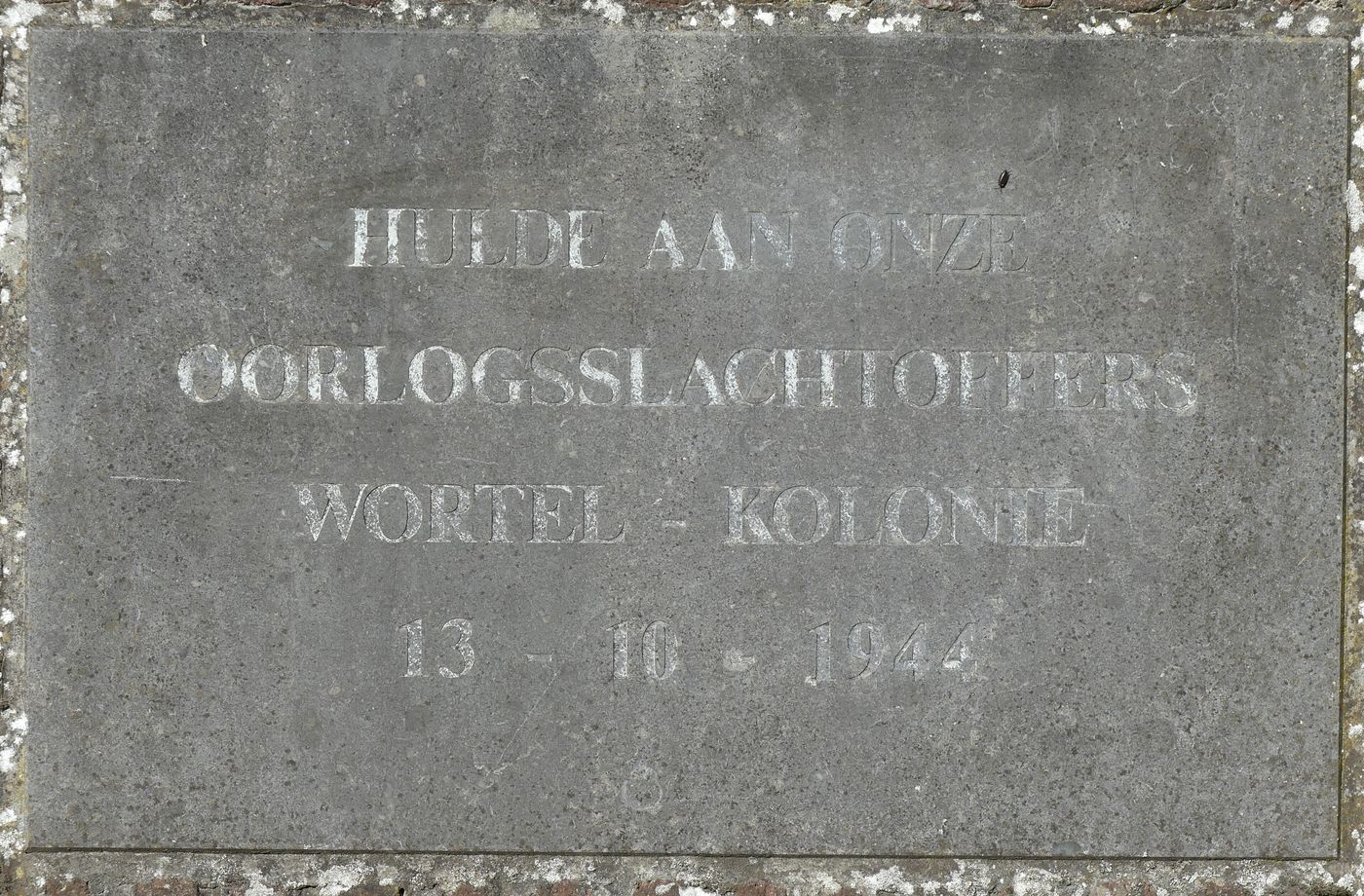
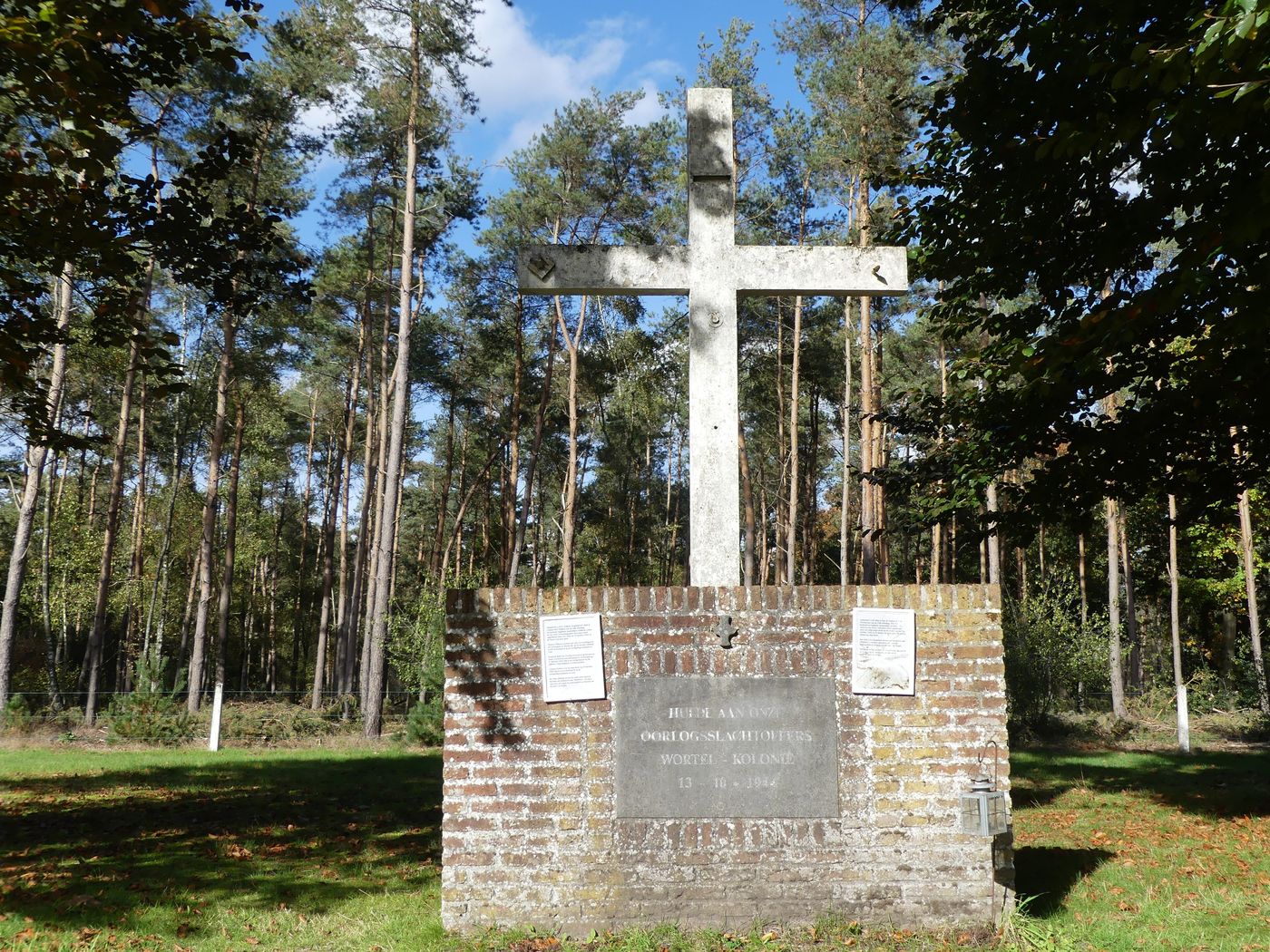
The cemetery today
The cemetery lies on the Torendreef, in the north of the estate, and is freely accessible: the entrance has no gate, by design. It is a stop on the heritage walk that starts at the former vagrants' farm (Kolonie 41, 2323 Hoogstraten). The landscape of Wortel Colony has been protected since 29 June 1999 and since 26 July 2021 has been part of the Unesco World Heritage site Colonies of Benevolence. The nomination file mentions the cemeteries with anonymous graves explicitly: they tell "a story of failure and profound human suffering".
Can you find a grave from this register? Usually not. The crosses that stand there now are concrete crosses from after 1962, and the name plates date from after 1986. The lead plaques from the years of this register lay scattered over the site, with no clear pattern. The number on a record is therefore the number from the register, not a guide to a place.
In 2008 the town of Hoogstraten decided to close the cemetery. Only the vagrants who stayed in Wortel of their own accord after 1993 could still be buried there: there were seventeen of them.
Timeline
- 1822
- The free colony of Wortel is founded.
- 1870
- The Belgian state buys the estate.
- 1891
- Law on vagrancy and begging. On 28 August the first vagrant dies in Wortel.
- 1892 to 1896
- The cemetery is laid out, according to Van den Bergh.
- 1929
- The house of refuge of Hoogstraten-Wortel is closed. Wortel stands empty.
- 1 March 1931
- Vagrants stay in Wortel again, as a section of Merksplas.
- 1 January 1935
- Lead plaques with a number and the date of death.
- 1 August 1935
- The Rijkskoloniegesticht, the colony asylum, opens. The elderly men move to Merksplas.
- March 1940
- The section for elderly men returns to Wortel.
- January 1941
- The plaques are given the letter M of Merksplas.
- 13 October 1944
- The colony is badly hit. Two days later it is evacuated.
- 24 October 1944
- Wortel Colony is liberated.
- 1945
- The vagrants of Merksplas come to Wortel.
- 1955
- Wortel becomes an independent institution again.
- 1962
- Concrete crosses replace the wooden ones.
- 1986
- The cemetery is laid out anew. The crosses are given a name plate.
- 1 March 1993
- The vagrancy law is abolished.
- 2021
- Unesco recognises the Colonies of Benevolence as World Heritage.
The register
The information on this website comes from a single spreadsheet, a transcription of the burial register. For each man it gives the family name and first name, the place and date of birth, the date of death, the date of burial or a note in its place, and for some of the men the number of the grave plaque and the registration number. It says nothing about occupation, family or cause of death.
The counts are on a page of their own: The register in figures.
For his list of names for the cemetery, Van den Bergh used the registers of deaths of the colony, the notebooks kept by the chaplain, correspondence about funerals and the plaques that were found. The Latin words and the notes about religion in this register suggest that the burial column comes from the chaplain's notebooks.
We show what is written, even where it cannot be right: a burial dated before the death, a year of birth that gives an impossible age. Such cases are marked on the record and are listed, each time the spreadsheet is uploaded, for the person who maintains it.
Glossary
- Vagrant, landloper
- Someone found without a fixed home, work or means of support. Until 1993 vagrancy was a reason to be sent to a colony by the justice of the peace.
- State Benevolent Colony, Rijksweldadigheidskolonie
- The state institutions of Merksplas, Wortel and Hoogstraten where vagrants and beggars lived and worked.
- House of refuge and beggars' depot
- The law of 1891 made a distinction. The house of refuge (toevluchtshuis) was for those who were old, ill or out of work; the beggars' depot (bedelaarsgesticht) for those who, according to the judge, could work but begged.
- Grave plaque, grafplaatje
- The plaque on the cross, made of lead in these years, with a number and the date of death.
- M before the number
- The M of Merksplas, on the plaques from January 1941. Wortel was then a section of Merksplas.
- Registration number, inschrijvingsnummer
- The number under which a colonist was entered in the roll of the institution, also called stamboeknummer or rolnummer (roll number). The inventory of the archive shows two series, one of the beggars' depot and one of the house of refuge. That could explain the short and the long numbers in this register, but no source confirms it.
- Leuven
- Note in the place of a date of burial. See above.
- Corpus translatum
- Latin: the body has been transferred. The man was not buried in the colony.
- Burgerlijk
- Civil: a funeral without a church service.
- Rijkskoloniegesticht
- The asylum for the mentally ill that was located in Wortel Colony from 1935 to 1945. The patients who died there are not in this register.
Searching further
- Zoek je voorouders ("Search for your ancestors") by Kolonie 5-7: the information cards of more than 55,000 vagrants, transcribed by volunteers. Cards less than a hundred years old are not included, for privacy reasons. The website is in Dutch.
- The archive of the State Benevolent Colonies is kept in the State Archives in Antwerp-Beveren (finding aid M36). It includes the detention files, arranged by name, and the rolls in which the registration number can be found. It has not been digitised.
- Deaths in the colony were reported to the municipality of Wortel, now Hoogstraten. The death certificate is in the registers of the civil registry.
Sources
The historical notes on this page are based on the following publications. They are separate from the information about people, which comes from the register alone.
- Willy Van den Bergh, De landlopersbegraafplaats vertelt geschiedenis, merksplas.nu, 2023 (the main source: laying out, plaques, counts per period, October 1944).
- Sibylle De Sadeleer & Marc De Borgher, Kolonie Wortel, Flemish heritage inventory, 2001-2016. Protection as a landscape: Rijksweldadigheidskolonie Wortel, 1999.
- J. Buyck & K. Velle, Inventaris van het archief van de Rijksweldadigheidskolonies Hoogstraten-Merksplas-Rekem-Wortel (1810-1980), Rijksarchief te Beveren, 1998 (finding aid M36).
- Jan Geypen & Valerie Vermassen, Ze leefden als een nummer en werden begraven als een nummer, Vlaamse Stam 54 (2018), 3, p. 263-272 (interview with Karel Govaerts of the Gevangenismuseum, the prison museum).
- Colonies of Benevolence. Nomination file, 2020 (nomination file for the Unesco World Heritage List).
- Marc Sprangers, Landlopers gezocht… en gevonden!, Tijd-Schrift 8 (2018), 3 (on the rolls and the numbers).
- Geheugen Collectief, Ze zijn daar! De provincie Antwerpen bevrijd in 1944, Toerisme Provincie Antwerpen, 2019.
- Wikipedia, Bevrijding van Hoogstraten (dates of the liberation); TracesOfWar, Monument Slachtoffers 13 oktober 1944 Wortel-Kolonie.
- Visit Hoogstraten, Erfgoedwandeling Wortel-Kolonie.
Images
- Begraafplaats Wortel, overzicht (ook de achtergrond van de startpagina, daar vervaagd, en het beeld bij gedeelde links, daar bijgesneden). G.Lanting, Wikimedia Commons, 2022. CC BY-SA 4.0, reduced in size. Source
- Begraafplaats Wortel, centraal kruis. G.Lanting, Wikimedia Commons, 2022. CC BY-SA 4.0, reduced in size. Source
- Begraafplaats Wortel, rijen kruisen. G.Lanting, Wikimedia Commons, 2022. CC BY-SA 4.0, reduced in size. Source
- Begraafplaats Wortel, bakstenen huisje. G.Lanting, Wikimedia Commons, 2022. CC BY-SA 4.0, reduced in size. Source
- Begraafplaats Wortel, ingang. G.Lanting, Wikimedia Commons, spring, uploaded in 2024. CC BY-SA 4.0, reduced in size. Source
- Kolonie 32, Wortel. Funkyxian, Wikimedia Commons, 2018. CC BY-SA 4.0, reduced in size. Source
- Kolonie Wortel. Beeldbank Onroerend Erfgoed, Vandevorst Kris, ID 435261, 2012. CC BY-SA 4.0, reduced in size. Source
- Begraafplaats Wortel, gedenkplaat. G.Lanting, Wikimedia Commons, 2022. CC BY-SA 4.0, reduced in size. Source
- Begraafplaats Wortel, kruis met gedenkplaat. G.Lanting, Wikimedia Commons, 2022. CC BY-SA 4.0, reduced in size. Source
- Orthofotomozaïek, middenschalig, winteropnamen, kleur (uitsnede). Digitaal Vlaanderen, 2025. Flemish model licence for free reuse, extract. Source
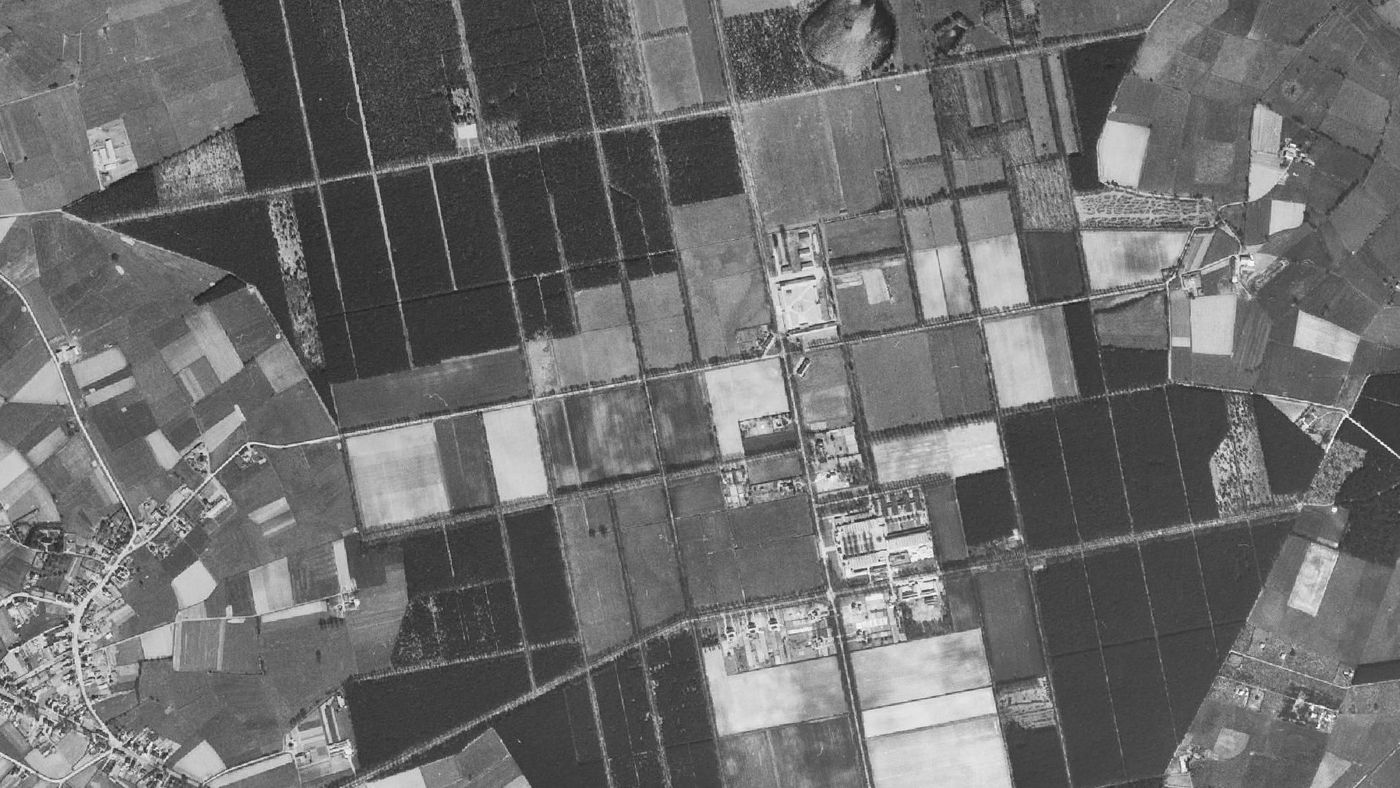
- Orthofotomozaïek, kleinschalig, zomeropnamen, panchromatisch, 1971 (uitsnede). Digitaal Vlaanderen, 1971. Flemish model licence for free reuse, extract. Source


