No grave plaque given
Tollenaere, Emile Ferdinand
Died on 23 May 1943, aged 85 years
- Born in Lokeren
- Buried on 26 May 1943
Search the burial register, 1932 to 1954
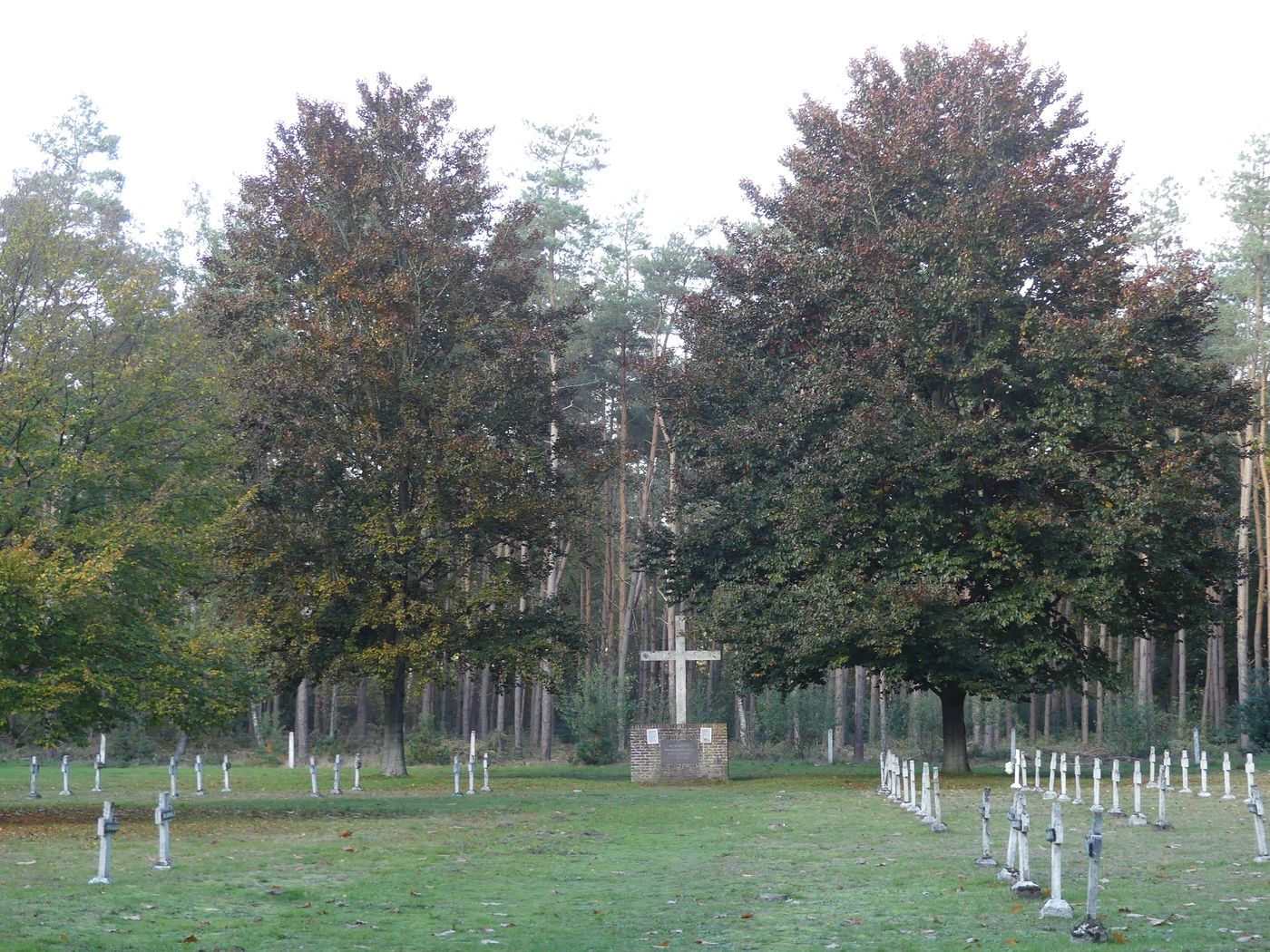
In the cemetery of Wortel Colony lie the men who died in the vagrants' colony, under crosses that carry only a number. The burial register gives them back a name. Search here for an ancestor, a family name or a village.
No grave plaque given
Died on 23 May 1943, aged 85 years
No grave plaque given
Died on 14 June 1943, aged 62 years
No grave plaque given
Died on 12 July 1934, aged 66 years
No grave plaque given
Died on 25 July 1946, aged 71 years
No grave plaque given
Died on 30 September 1935, aged 78 years
Grave plaque 40
Also written as Van Geertruyen
Died on 15 November 1947, aged 77 years
No grave plaque given
Died on 1 September 1934, aged 63 years
Grave plaque 17
Died on 23 June 1936, aged 81 years
No grave plaque given
Died on 4 December 1934, aged 77 years
No grave plaque given
Died on 17 January 1943, aged 71 years
No grave plaque given
No grave plaque given
No grave plaque given
Died on 18 January 1934, aged 57 years
No grave plaque given
No grave plaque given
Died on 7 January 1943, aged 70 years
No grave plaque given
Died on 11 January 1944, aged 68 years
Grave plaque 7
No grave plaque given
Died on 11 October 1942, aged 46 years
No grave plaque given
Died on 20 February 1934, aged 78 years
No grave plaque given
Died on 14 February 1935, aged 56 years
A man who died in the colony was given a wooden cross with a lead plaque: a number, not a name. Every man in the register is shown here in the order in which they died, one row per year. Choose a plaque to read who he was.
Wortel Colony was one of the State Benevolent Colonies where the Belgian state housed vagrants and beggars. A man who died there and was not claimed by his family was given an anonymous grave in the cemetery of the colony, under a cross with a number.
The burial register keeps what the cross leaves unsaid: a name, a place of birth, a date. This website makes that register searchable.
Type a family name, a first name or a place of birth. The names were transcribed from a handwritten register, so the search also shows names that are spelled differently but sound the same.
Every man has a page with what the register keeps about him: his name, where and when he was born, the day he died and what was noted about the burial. For some of the men the number of the grave plaque is given as well.
Start with a name that occurs often, browse the whole list or open a record from the register.